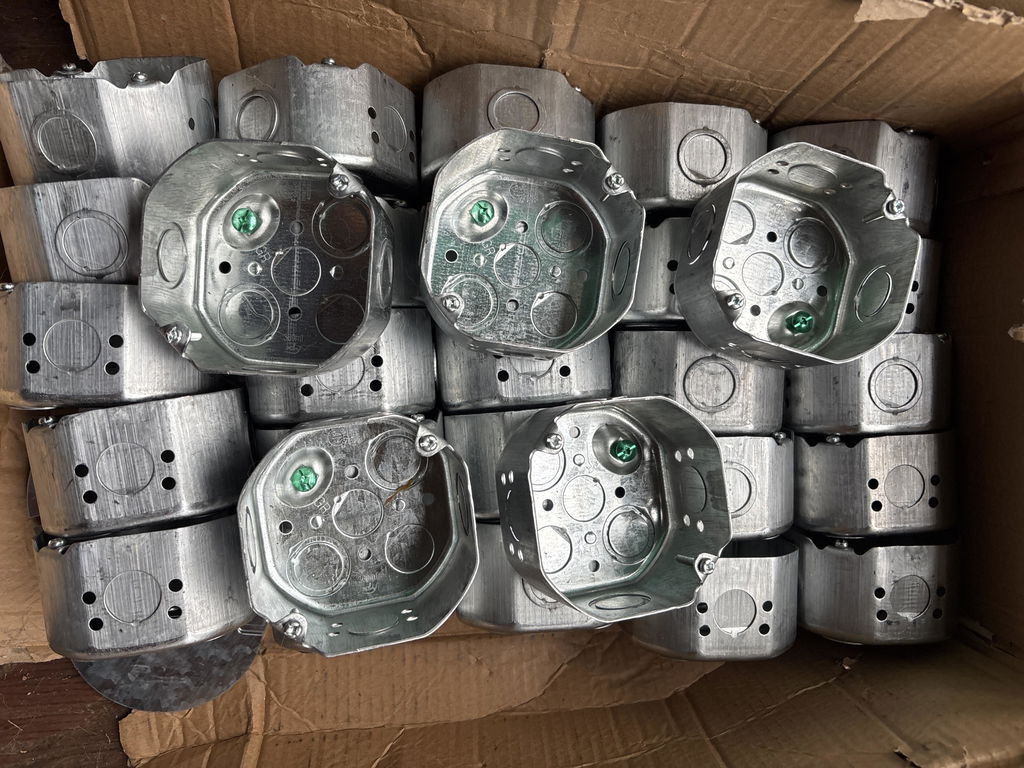
A 1-1/2" x 5" galvanized steel protector plate for wood studs. It goes over the face of a stud or plate where cable passes through, so a drywall screw or trim nail hits steel instead of your conductors.
Why these get installed by the handful
Cable that runs close to the face of a stud has to be protected, and a steel plate is the accepted way to do it. The plate goes on at rough-in, costs almost nothing, and prevents the failure that is genuinely expensive: a screw through a cable inside a closed wall, found weeks later by a breaker that will not hold. Walk the rough-in and cover every bored hole near a face — drilled plates, notched studs, the top plate under the attic run.
Specifications
| Model |
PLATE 99PP |
| Size |
1-1/2" x 5" |
| Material |
Galvanized steel |
| Knockouts |
None |
| Case quantity |
400 |
Pro tip from the counter
Buy the case, not the handful. Crews that keep a case in the van install them properly; crews counting out six per house start deciding which holes really need one, and that decision is always wrong in the same direction.
Best for: rough-in crews protecting cable at bored studs, notched plates and anywhere the finishers will be driving screws.
Common questions
When do I have to use a protector plate?
Whenever cable runs close enough to the face of a stud or plate that a fastener could reach it. The exact clearance is set by the Canadian Electrical Code and enforced by your inspector — if the hole is near the face, plate it.
Does it need to be nailed or does it press on?
Plates of this type are designed to be driven onto the stud edge. Set it flat so it does not stand proud and telegraph through the drywall.
Will it work on steel studs?
This one is for wood. Steel stud openings use grommets or bushings instead, because the cut edge of the stud is the hazard rather than a fastener.
How many come in a case?
400. That is the unit most rough-in crews buy.