Powering Protection: A Canadian Guide to Child-Safe Electrical Design
Daycare electrical safety in Canada. Discover code-aligned breakers, lighting, and outlet solutions, plus KidiCare’s Canada-wide expertise for Ontario and Quebec licensing.

Contractor-Grade Electrical Safety for Childcare Environments
By Robert Khamis – Childcare Design & Compliance Consultant
Childcare environments require a higher standard of electrical safety than typical residential or light-commercial spaces. Constant movement, shared play zones, and young children mean that electrical hazards must be engineered out of the space, not merely labeled or monitored.
At Maple Electric Supply, we support contractors and childcare operators with code-aligned electrical products that are appropriate for licensed daycare use across Canada. Below are the core electrical safety strategies every childcare space should implement.
1. Electrical Protection That Meets Daycare Expectations
Dual-Function Circuit Protection at the Panel
Modern daycare inspections increasingly expect dual-function AFCI/GFCI protection in applicable circuits. Products such as the Siemens 15-Amp Dual Function AFCI/GFCI Circuit Breaker help reduce the risk of both electrical fires (from arc faults) and dangerous shock exposure (from ground faults).
→ Link product name to the Siemens dual-function breaker product page on mapleelectricsupply.ca
This type of protection is especially important in:
-
Washrooms and diapering areas
-
Kitchenettes and staff prep zones
-
Any circuits serving mixed-use rooms
Ceiling Lighting That Removes Tip and Burn Hazards
Floor lamps and plug-in lighting introduce unnecessary risks in childcare environments. A safer alternative is hardwired, low-profile ceiling lighting such as 4-inch LED slim pot lights, which eliminate exposed cords and remain cool to the touch during operation.
Fire-rated models (where required) also support passive fire protection strategies reviewed during licensing and insurance inspections.
→ Link “4-inch LED slim pot lights” to the relevant recessed lighting collection or product page
Safe Power Access in Active Play Areas
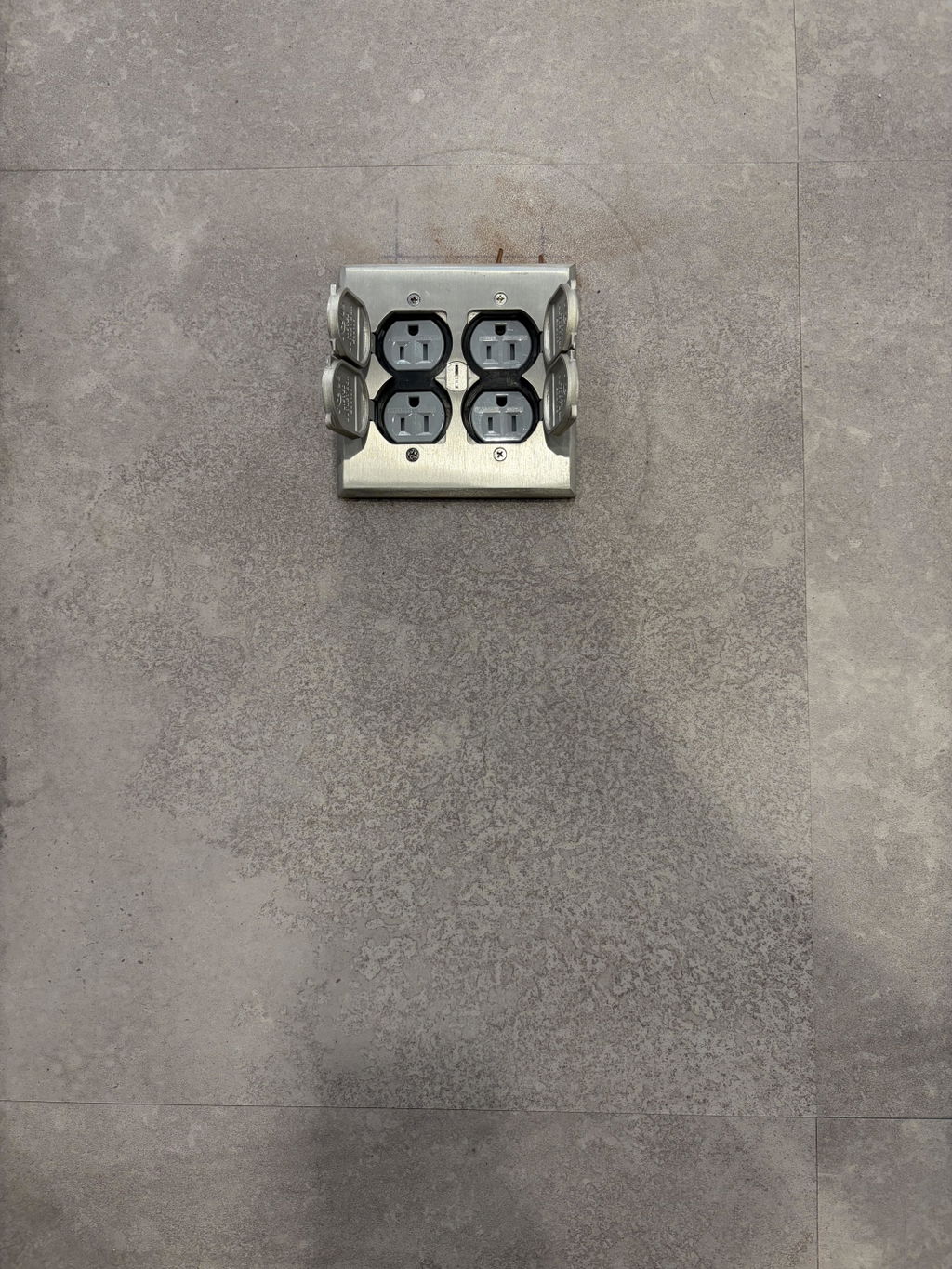
When power is required in central rooms, extension cords across floors are not acceptable. A safer solution is flush-mounted floor outlets with tamper-resistant protection, such as the Arlington pop-up floor box with tamper-resistant receptacle.
These covers remain sealed and locked when not in use, reducing:
-
Trip hazards
-
Unauthorized access to live power
-
Wear from constant foot traffic
→ Link “Arlington pop-up floor box with tamper-resistant receptacle” to the product page


2. Why Layout Planning Is an Electrical Safety Strategy
Even the best electrical products can be undermined by poor layout. If a child can reach a plug or see a dangling cord, the risk remains.
This is where KidiCare plays a critical role.
KidiCare specializes in daycare layout and furniture planning that aligns with Canadian licensing requirements. Their process focuses on removing access to electrical points through spatial design, millwork, and furniture placement, rather than relying solely on hardware fixes.
Expert Insight from Robert:
“True safety comes from eliminating temptation. We design rooms so outlets are physically blocked by cabinetry or furniture. Where essential equipment must stay plugged in, we recommend lock-in solutions like the Arlington metal flip-lid cover or Intermatic extra-duty protective covers, which prevent children from pulling plugs out.”
→ Link each product name to its corresponding Maple Electric Supply product page
3. A Practical, Inspection-Ready Partnership Model
Daycare operators often encounter issues when electrical planning and space design are handled separately. A coordinated approach reduces inspection delays and costly rework.
-
Design & Compliance Planning
KidiCare reviews floor plans early to ensure furniture placement naturally limits access to electrical hazards. -
Code-Compliant Electrical Supply
Maple Electric Supply provides the breakers, tamper-resistant receptacles, floor boxes, and fire-rated lighting required to meet inspection standards. -
Execution Without Retrofits
When layout and electrical infrastructure are planned together, safety is built into the space rather than corrected later.
Plan Safety Before Inspection Day
Electrical safety in childcare spaces is most effective when addressed before construction or renovation begins.
For daycare layout planning, licensing-conscious design, and turnkey consultancy, visit KidiCare.ca.
When safety is designed into the environment, compliance follows naturally.
FAQ with Robert – Childcare Design & Electrical Safety
Who is Robert and what is your background in childcare safety?
I work hands-on with daycare operators, contractors, and inspectors across Canada to design childcare spaces that pass licensing and actually work day to day. My background is in daycare layout planning, compliance coordination, and turnkey setup, which means I am usually brought in before construction starts or when a space fails inspection and needs to be corrected properly.
Why is electrical safety such a common issue in daycare inspections?
Most issues come from treating a daycare like a regular commercial unit. Children interact with spaces very differently than adults. Inspectors look closely at access points, not just whether the product itself is code-compliant. An outlet can be legal and still fail if it is reachable, exposed, or poorly positioned.
What mistakes do you see most often with electrical planning?
The biggest mistake is fixing problems after the fact. I often see extension cords, plug-in lamps, or outlets placed directly behind open play zones. These are not bad products, but they are used in the wrong context. Good safety design removes the need for children to interact with electricity at all.
How do you work with electricians and suppliers like Maple Electric Supply?
I do not replace electricians. I support them. When layout and design are planned correctly, electricians can install the right products once, instead of coming back to redo work. Working with a supplier like Maple Electric Supply ensures the hardware used is contractor-grade, code-aligned, and inspection-ready, which makes everyone’s job easier.
What makes KidiCare different from general designers or contractors?
KidiCare focuses only on childcare environments. We understand licensing language, inspector expectations, and how children actually move through a space. Our job is to make safety invisible. If a child never notices an outlet or cord, we have done our job properly.
When should a daycare operator bring you into a project?
As early as possible. The best time is before permits or renovations begin. The second-best time is immediately after a failed inspection. Early planning almost always costs less than corrections later.
Is there a difference between Ontario and Quebec when it comes to daycare planning?
Yes. While core electrical and building codes are largely aligned at the national level, daycare licensing and inspection criteria differ between Ontario and Quebec, particularly in how space usage, supervision zones, and safety controls are interpreted.
In Ontario, inspections tend to place strong emphasis on clear sightlines, accessibility, and functional room separation, while Quebec often applies more prescriptive requirements tied to room function and fixed installations, especially in CPE environments. These differences affect how electrical access points, lighting, and furniture layouts should be planned from the start.
The key is not the products themselves, but how and where they are integrated into the space.
Do you offer daycare planning expertise across Canada?
Yes. KidiCare provides daycare planning and compliance support Canada-wide, including Ontario, Quebec, and other provinces. Our approach adapts to provincial licensing frameworks while staying grounded in national building and electrical standards.
We coordinate layout planning, safety strategy, and turnkey execution so that daycare operators can move through inspections confidently, regardless of province.
How does your approach stay compliant across provinces?
We plan spaces based on inspection intent, not just minimum code. That means:
-
Reducing child access to electrical points through layout and millwork
-
Selecting contractor-grade, code-aligned electrical hardware from trusted suppliers like Maple Electric Supply
-
Adjusting layouts to meet provincial licensing expectations without redesigning the entire space
This allows daycare operators to scale or expand into new provinces without starting from scratch each time.
What is one piece of advice you give every daycare owner?
Do not rely on products alone. Safety comes from design decisions, not warning labels. If you design the space so children cannot access electrical hazards, compliance and peace of mind follow naturally.