Conduit & Fittings 101 (Canada): EMT, Connectors & When to Use What
EMT, PVC, flex and the fittings that join them — what each conduit type is for, indoor vs outdoor/wet locations, conduit fill basics under the CEC, and the connectors Canadian electricians reach for.

EMT (thinwall steel) is the go-to indoors; PVC for underground, wet or corrosive runs; FMC/LFMC for flex and vibration. Fittings must be rated for the location (raintight outdoors). Conduit fill is set by the Canadian Electrical Code — confirm type, fill and permits with a licensed electrician.
Who this guide is for
Electricians and informed homeowners choosing conduit and fittings for a wiring run, renovation, or outdoor project — and figuring out which raceway and connectors to source.
What is conduit and when do you need it?
Conduit is a protective raceway — a tube that wiring runs through — that shields conductors from physical damage, moisture, and corrosion and gives you a defined path for pulling and replacing wire. You generally reach for it where cable would be exposed or vulnerable: surface-mounted runs, garages and workshops, exterior and underground runs, commercial and industrial spaces, and anywhere the Canadian Electrical Code or your inspector calls for a wiring method rated to the environment.
Whether conduit is required for your specific job — versus a cable assembly like NMD90 — is a code and inspection decision. Confirm the wiring method with a licensed electrician before you buy.
EMT vs PVC vs flexible (FMC/LFMC) — which?
- EMT (electrical metallic tubing / thinwall steel): the common indoor choice — rigid, economical, easy to bend and route. Joined with set-screw or compression fittings (use raintight compression fittings for damp/outdoor locations).
- PVC (rigid non-metallic): corrosion-resistant and the typical pick for underground, wet, and corrosive environments. Joined with solvent-weld couplings and adapters.
- FMC (flexible metal conduit): bends around obstacles and absorbs vibration — handy for short connections to motors or fixtures indoors.
- LFMC (liquidtight flexible metal conduit): a jacketed flex conduit for outdoor, wet, and vibrating equipment connections where moisture protection matters.
Indoor vs outdoor / wet locations?
The environment drives both the conduit and the fittings. Indoors and dry, EMT with standard set-screw fittings is common. Outdoors, in damp areas, or underground, you step up to wiring methods and fittings rated for the location — PVC for underground and corrosive runs, LFMC for wet flexible connections, and raintight (wet-location-rated) fittings on metal conduit. The cardinal rule: the weakest link is the fitting, so a raintight run needs raintight connectors and fittings, not just the right tube.
This guide is for product education and project planning only. Electrical work must follow the applicable Canadian Electrical Code, provincial requirements, manufacturer instructions, and inspection. Conduit installation and wiring should be performed by a Licensed Electrical Contractor. Where conduit is required, and which type, is determined by code and your authority having jurisdiction (in Ontario, the ESA; in Quebec, the RBQ).
Conduit type → typical use and location
| Conduit type | Typical use | Location |
|---|---|---|
| EMT (thinwall steel) | General exposed/surface runs | Indoor, dry (raintight fittings for damp) |
| PVC (rigid non-metallic) | Underground & corrosive runs | Outdoor, wet, underground, corrosive |
| FMC (flexible metal) | Flex connections, vibration | Indoor, dry |
| LFMC (liquidtight flexible) | Flexible runs to wet/vibrating equipment | Outdoor, wet locations |
What fittings join conduit?
Fittings are what turn lengths of conduit into a complete, code-compliant raceway. The common families:
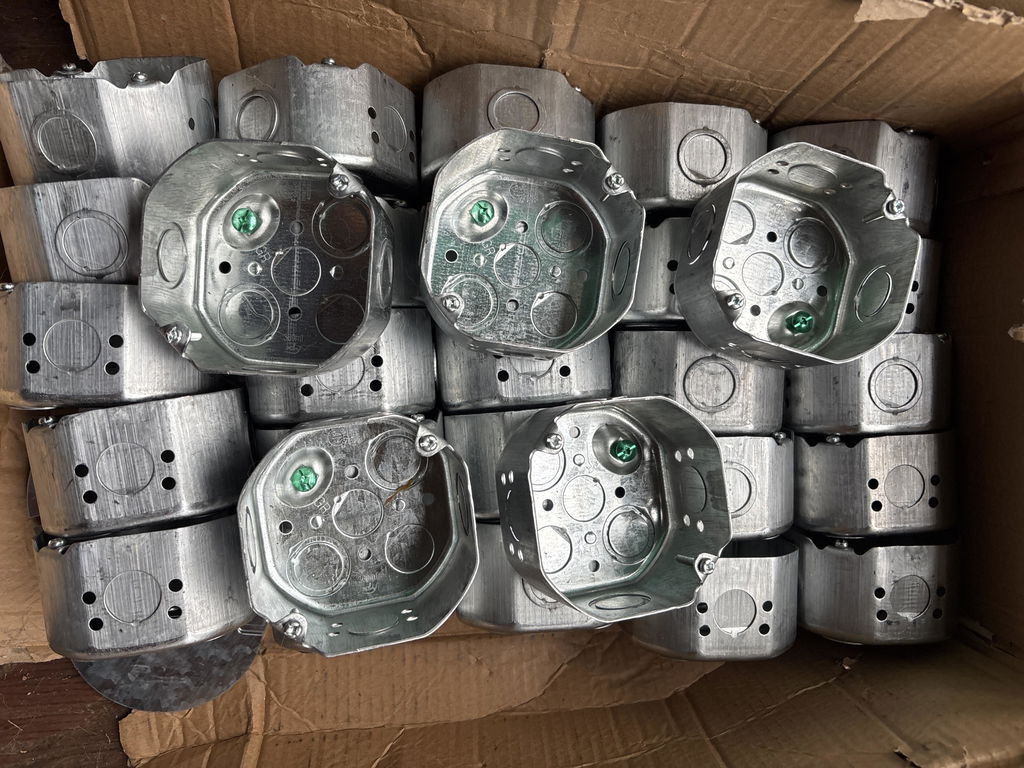
- Connectors: terminate conduit into a box or enclosure (set-screw, compression, or raintight for wet locations).
- Couplings: join two lengths of conduit end to end.
- LB conduit bodies (and LL/LR/T/C bodies): provide a directional change plus a removable cover for pulling wire — an LB is the classic pull point where a run turns to enter a wall.
- Locknuts: secure a connector to a box.
- Bushings: protect conductor insulation at the conduit end from abrasion.
Maple is an authorized Arlington Industries reseller, so the conduit bodies, connectors, and fittings we supply are the genuine listed parts — match them to your conduit type and location rating. Browse Arlington Industries fittings, and pair them with boxes & enclosures and wire & cable for the full run.
How many wires fit? (conduit fill basics)
Conduit fill — how many conductors of a given size you can legally pull through a given conduit — is governed by the Canadian Electrical Code. The Code sets maximum fill percentages so wire can be pulled without damage and so heat can dissipate; the exact allowable count depends on conduit size, conductor size and type, and the number of conductors. Rather than rely on a rule of thumb, size the conduit with a licensed electrician against the current CEC fill tables for your conductors.
Do I need a permit or electrician?
Conduit runs are part of an electrical installation, so they typically require a permit and inspection, and the work should be done by a Licensed Electrical Contractor. In Ontario that means ESA involvement; in Quebec, RBQ. We supply the conduit and fittings; your electrician confirms the wiring method, pulls the permit, and does the install.
Common mistakes
Using indoor (non-raintight) fittings outdoors · mixing fitting brands/types not listed together · overfilling conduit past CEC limits · choosing EMT for an underground run that should be PVC · skipping bushings and chewing up conductor insulation at the conduit ends.
Related products
Arlington Industries Fittings & Conduit Bodies · Boxes & Enclosures · Wire & Cable
When to call a licensed electrician
For confirming the wiring method, sizing conduit fill, pulling permits, and installation — always use a Licensed Electrical Contractor and follow the Canadian Electrical Code.
Frequently asked questions
What is EMT conduit and where is it used?
EMT (electrical metallic tubing) is thinwall steel conduit — the common, economical choice for exposed and surface-mounted runs indoors, like garages, basements, and workshops. It bends easily and joins with set-screw or compression fittings. For damp or outdoor locations you use raintight (wet-location-rated) compression fittings, and for underground or corrosive runs you'd typically switch to PVC instead.
EMT or PVC for an outdoor or underground run?
PVC (rigid non-metallic conduit) is the usual choice for underground, wet, and corrosive runs because it resists corrosion and moisture. EMT is a steel product better suited to dry indoor use. Which is required for your specific outdoor or buried run is a code decision, so confirm the wiring method with a licensed electrician and your authority having jurisdiction before you buy.
What fittings do I need to join conduit?
The core families are connectors (to terminate conduit into a box), couplings (to join two lengths), conduit bodies like LBs (for directional changes and pull points), locknuts (to secure connectors to boxes), and bushings (to protect conductor insulation at the ends). The fittings must be rated for the location — raintight outdoors — and listed for your conduit type. Maple is an authorized Arlington Industries reseller, so we can match genuine listed fittings to your run.
How many wires can I run in a conduit?
Conduit fill is governed by the Canadian Electrical Code, which sets maximum fill percentages based on conduit size, conductor size and type, and the number of conductors — so there's no single universal number. Overfilling makes wire hard to pull and traps heat. Size the conduit with a licensed electrician against the current CEC fill tables for your specific conductors rather than relying on a rule of thumb.
Do I need a permit or an electrician to install conduit?
Conduit runs are part of an electrical installation, so they generally require a permit and inspection, and the work should be performed by a Licensed Electrical Contractor — in Ontario that means ESA involvement; in Quebec, RBQ. Maple is a supply house, not an electrical contractor, so we don't give wiring instructions. We help you choose and source the right conduit and fittings; your electrician confirms the method, pulls the permit, and installs it.
Sources and further reading
- Canadian Electrical Code (CSA C22.1) — wiring methods and conduit fill tables
- Electrical Safety Authority (Ontario): esasafe.com
- Arlington Industries product documentation: aifittings.com
- CSA Group product listing: csagroup.org/testing-certification/product-listing
Not sure which conduit and fittings your run needs? Send Maple your project details — indoor or outdoor, conduit type, and conductors — and we'll match EMT, PVC, or flex plus the right Arlington fittings.
Ask Maple →