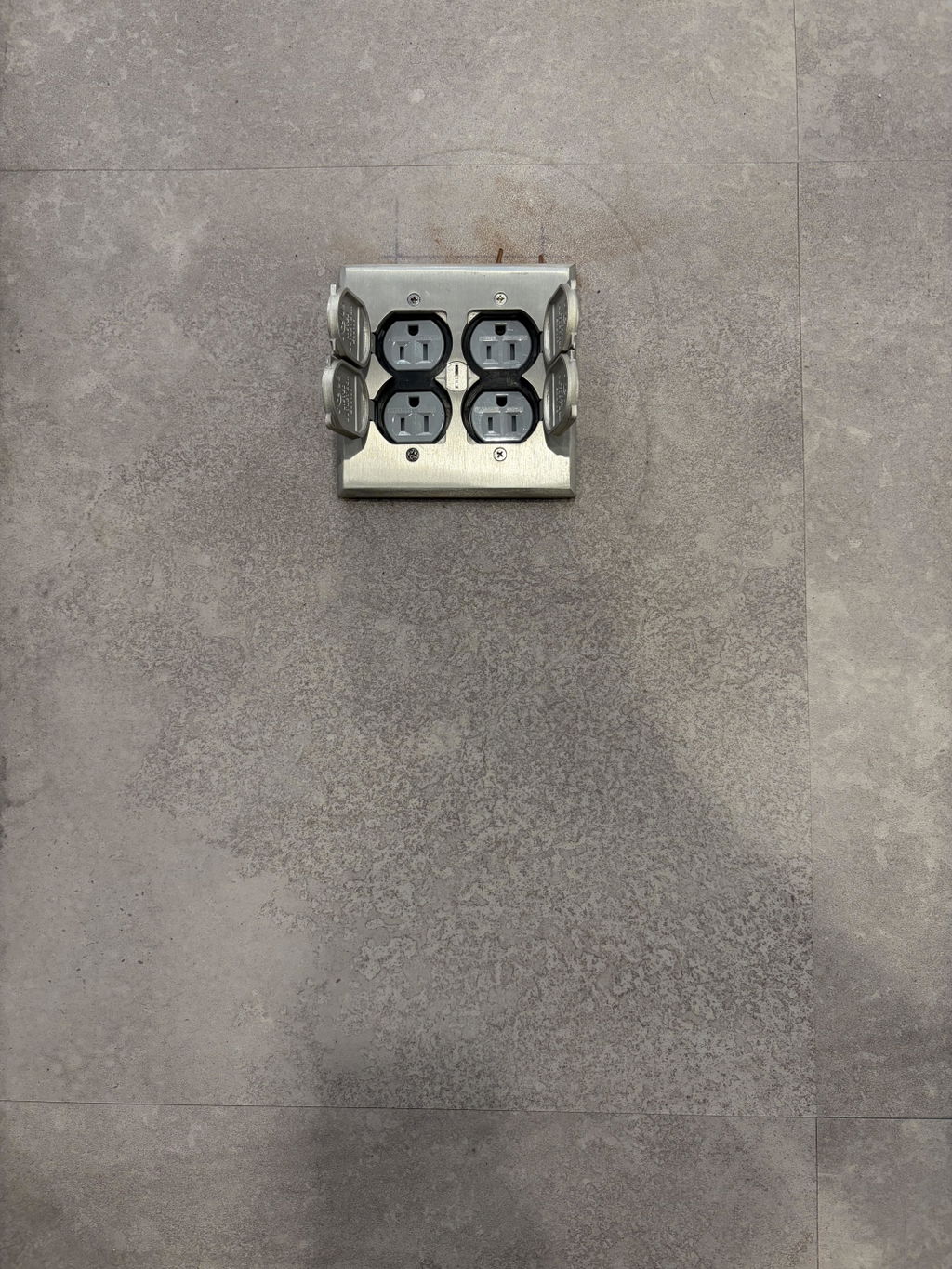
Outdoor Outlets & Weatherproofing: Covers, WR Devices, and Doing Outside Power Right
Outdoor power in Canada has to survive rain, ice, and −30°C — and pass inspection. This guide covers the three layers that make an outdoor outlet safe (GFCI + WR device + in-use cover), when you need an outdoor post, and the Arlington hardware electricians default to.


A properly weatherproofed outdoor outlet in Canada has three layers: GFCI protection (shock safety), a weather-resistant (WR) receptacle (corrosion/UV-rated device), and a while-in-use ("bubble") cover (keeps water out while something is plugged in). Away from the house — gardens, docks, sheds — the receptacle rides on a purpose-built outdoor post.
The three layers, explained
Layer 1 — GFCI protection
Outdoor receptacles require GFCI protection — the device that cuts power in milliseconds when current leaks (through water, or you). Protection can live in the receptacle itself or the breaker; how the two differ is covered in GFCI vs AFCI.
Layer 2 — the WR receptacle
Weather-resistant (WR) receptacles are built for outdoor life: corrosion-resistant contacts, UV-stable faces, cold-impact tolerance. Code requires WR-rated devices in wet/damp locations; the "WR" is stamped on the face. A standard interior receptacle in an outdoor box is the classic shortcut that fails inspection — and then fails in February.
Layer 3 — the in-use cover
The old flip-cover protects an outlet only while nothing is plugged in — useless for the actual job (holiday lights, pond pumps, block heaters, landscape transformers run plugged-in for months). A while-in-use cover ("bubble cover") closes over the plug and cord, keeping the connection dry in active use. Deeper dive on the terminology: Weatherproof vs Weather-Resistant.
| Cover type | Protects when plugged in? | Use |
|---|---|---|
| Flat flip cover | ❌ | Covered porches, rarely-used outlets |
| While-in-use (bubble) | ✅ | Everything that stays plugged in — the default outdoors |
| In-use, low-profile (In-Box™) | ✅, recessed look | Front-of-house curb appeal, stucco/siding |
| Horizontal vs vertical | — | Match the receptacle orientation & cord exit |
Away from the house: outdoor posts
Garden receptacles, landscape lighting transformers, pond gear, and EV-adjacent outdoor power can't hang off a fence board. Purpose-built outdoor posts (Arlington's Gard'N Post family is the contractor standard) provide a code-friendly mounting point with integrated boxes and in-use covers — at the garden bed, the dock, the driveway edge. Maple stocks the full line: Arlington outdoor posts & GFCI supports.
Boxes and fittings behind the cover
The cover is only as good as the box behind it: outdoor installations use weatherproof-rated boxes, correctly sized, with sealed cable entries. Recessed In-Box™ units integrate box + extra-duty cover in one low-profile assembly — popular on new siding and stucco. Browse Arlington weatherproof & in-use covers and outdoor boxes. Maple is an authorized Arlington reseller — genuine product, valid warranty, stocked in Canada in CAD.
Canadian winter notes (the part US guides skip)
- Cold-rated plastics matter: bargain covers crack at −20°C; quality units (Arlington's are UV-stabilized) stay serviceable through freeze-thaw.
- Ice loading: in-use covers shed ice better mounted with the hinge up; cords should exit downward (drip loop) so meltwater doesn't track into the connection.
- Seasonal loads: holiday lighting and block heaters mean outlets live under continuous winter use — exactly the scenario in-use covers exist for.
- Snow line: mount receptacles high enough to stay above typical snow accumulation; on posts, that's part of why 19.5" and 26" heights exist.
Planning new outdoor power
New outdoor circuits are electrical work — ESA notification in Ontario, licensed contractor in Quebec (provincial rules). Your part is the plan and the parts: where you want power, what runs continuously, and having the right hardware on site before the electrician arrives. Doing a bigger yard project? Landscape lighting pairs naturally — see the outdoor lighting collection.
Common outdoor power mistakes
- Flip cover on the outlet running the pond pump (water in the connection by week two)
- Interior-grade receptacle outdoors ("it was white and fit")
- No drip loop on cords
- The extension-cord-out-the-window "solution" running all winter — the thing outdoor receptacles exist to end
- Mounting a receptacle where the snowbank lives
- Cheap cover that shattered the first −25°C night
Frequently asked questions
Do outdoor outlets need GFCI in Canada?
Yes — outdoor receptacles require GFCI protection, via the receptacle or the breaker.
What's the difference between weatherproof and weather-resistant?
WR is the device rating (receptacle built for outdoor conditions); weatherproof describes the enclosure (box + cover keeping water out). You need both — full explanation here.
Do I really need a bubble cover?
If anything stays plugged in outdoors — lights, pumps, heaters — yes. Flat covers only protect unused outlets.
How do I add an outlet in the middle of the yard?
An underground run to a purpose-built outdoor post (with in-use cover and GFCI protection), installed by a licensed electrician. The post hardware is off-the-shelf — Arlington Gard'N Post family.
Can I use an indoor extension cord outside temporarily?
Outdoor-rated cords only, and "temporary" should mean days, not seasons. Permanent needs deserve a permanent receptacle.
What does an inspector look for on outdoor outlets?
GFCI protection, WR-marked devices, proper weatherproof boxes/covers (in-use covers where loads stay plugged in), and sealed entries. The three layers in this guide are the checklist.
- Electrical Safety Authority (Ontario) — outdoor electrical safety: esasafe.com
- Arlington Industries — product documentation (In-Box™, Gard'N Post): aifittings.com
- CSA Group — wet/damp location device standards: csagroup.org
Planning outdoor power? Maple stocks the whole Arlington outdoor line in Canada — covers, boxes, posts. Ask Maple
Ask Maple →